Literacy
Creating classrooms where every child grows as a reader, a writer and a thinker.
Literacy learning should be rich, joyful, and intellectually ambitious. Our professional learning helps primary teachers weave together the full picture of skilled literacy teaching.
WHAT WE BELIEVE
We believe the science of reading is a body of research, not a program, a checklist, or a single model. Skilled literacy teaching draws on that research and applies it with professional judgement. It means taking decoding seriously and taking language, literature, and meaning-making seriously. It means building classrooms where students encounter complex, rich texts, and where teachers have the knowledge and repertoire to support students to interpret that complexity.
01
Complex texts as the engine.
Students become powerful readers through sustained engagement with rich, demanding literature.
02
Active, motivated reading.
We recognise that skilled reading involves decoding, language comprehension, and active self-regulation.
03
Talk as the scaffold.
Dialogic teaching and teacher think-aloud are how we make complex texts accessible.
04
Reading and writing as one.
Students write most powerfully when they read like writers.
PROFESSIONAL LEARNING WORKSHOPSWORKSHOP ONE
From Decoding to Deep Reading: Building the Language Comprehension Classroom
A foundational full-day workshop that repositions what literacy teaching looks like across the primary years — and why language comprehension is the missing piece in most schools.
Most schools have invested heavily in decoding. But skilled reading involves more than cracking the code. Reading science tells us that skilled reading depends on decoding, language comprehension, and active self-regulation working together.
This workshop builds a shared foundation across your whole staff. Teachers explore how reading development looks different at different year levels, what language comprehension actually involves, and what it means to build a classroom where complex texts are the norm.
Grounded in current reading research and aligned with the Victorian and Australian Curriculum, this is the right starting point for schools wanting to build a coherent, whole-school approach to literacy.
What teachers explore
The Active View of Reading
How literacy development shifts from F–2 to Years 3–6
What a language comprehension classroom looks like in practice
The role of complex, high-quality texts across year levels
Teacher think-aloud as a tool for scaffolding hard texts
WORKSHOP TWO
Teaching Vocabulary and Comprehension Through Complex Texts
A deep-dive workshop on the instructional moves that build vocabulary, knowledge, and comprehension.
Once students can decode, what do you do next? This is the question most upper primary teachers are grappling with — and where many schools are least well-supported. Phonics check results are improving, but reading comprehension at Year 5 and 6 remains stubbornly shallow.
This workshop draws on the evidence around rich vocabulary instruction, structured discussion and text-based comprehension to build a clear pedagogical model for Years 3–6. Teachers leave with concrete approaches for selecting and using complex texts, teaching Tier 2 vocabulary deeply, and using dialogic discussion as a vehicle for comprehension development.
What teachers explore
Selecting texts for complexity and richness
Tier 2 vocabulary: what it is and how to teach it
Dialogic teaching moves that develop higher-order thinking
Building background knowledge
What comprehension instruction looks like beyond comprehension strategies
WORKSHOP THREE
The Reading–Writing Connection: Mentor Texts, Language and Sentence Craft
A practical workshop on using high-quality literature as the model and engine for writing.
The most powerful writing teachers are also deep readers of craft. When we show students how writers make choices - like how a sentence is built, how cohesion creates flow, how punctuation creates pace - we give them something richer than any writing checklist.
This workshop builds teachers' capacity to use mentor texts as the centre of their writing instruction, with a developmental lens that works across year levels. Early years teachers explore how talk around text and sentence-level play builds the foundations of writing. Upper primary teachers go deeper into grammar, cohesion and the language features that lift student writing.
What teachers explore
The teaching–learning cycle: reading like a writer across year levels
Noticing and naming: how to make language features visible to students
Sentence-level work: structure, variation and rhetorical effect
Teaching grammar in context
Cohesion, voice and the features that distinguish strong upper primary writing
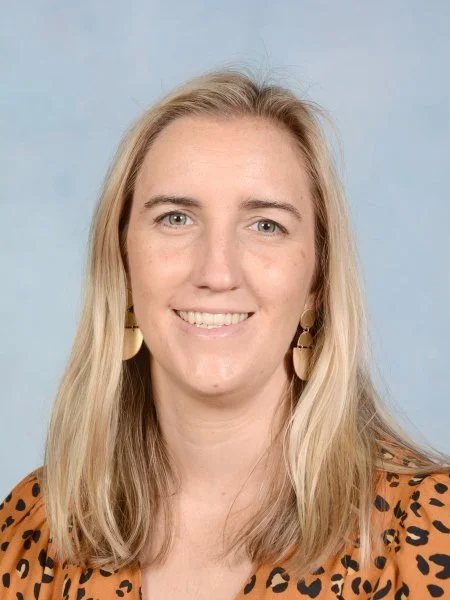
YOUR FACILITATORJemma Tresise
Instagram teachingthroughtexts
From 2024–25, Jemma served as Expert Teacher in Residence at the Victorian Academy of Teaching and Leadership, leading the Primary English discipline and working with over 250 Victorian teachers from across the state.
Jemma has spent over 17 years working at the school and system level, with a sustained focus on literacy, curriculum, and the development of teachers' instructional practice.
At the Victorian Academy of Teaching and Leadership, Jemma led the Primary English discipline within the Academy's Teaching Excellence Program. She designed and facilitated professional learning that connected current literacy research with practical, high-impact classroom strategies, and connected participants with subject matter experts from across Australia and the world.
Prior to this, Jemma worked in school improvement across the North-East Victorian Region, supporting schools to use data to drive improvement and building the capacity of middle leaders to lead change in their teams.
Jemma is committed to an approach that is evidence-informed without being prescriptive . She draws on the best of what the field offers and applies it with professional judgement in the Victorian primary context.